I’ll be honest with you: when I first heard the term “morning yoga,” I rolled my eyes harder than a rusted gear on an old Leica. I pictured those expensive, high-tech studios with the neon lights and the instructors telling you to “align your chakras” while you struggle to touch your toes. To a retired engineer who spent decades dealing with the hard, unyielding realities of steel and concrete, that whole scene felt like a lot of unnecessary fluff. I didn’t need a designer mat or a subscription to a wellness app to find some peace; I just needed a way to stop my joints from creaking like a settling foundation the moment I stepped out of bed.
I’m not here to sell you on a spiritual transformation or a way to become a human pretzel. What I want to share is how a few simple, unpretentious movements have become my way of claiming the day before the rest of the world starts shouting. I’ve stripped away the jargon and the hype to focus on what actually works for a body that’s seen its fair share of miles. This is about using practical movement to find a little bit of stillness, ensuring that when I finally sit down with my coffee, I’m actually present enough to enjoy it.
Table of Contents
A Gentle Morning Stretches Ritual to Savor
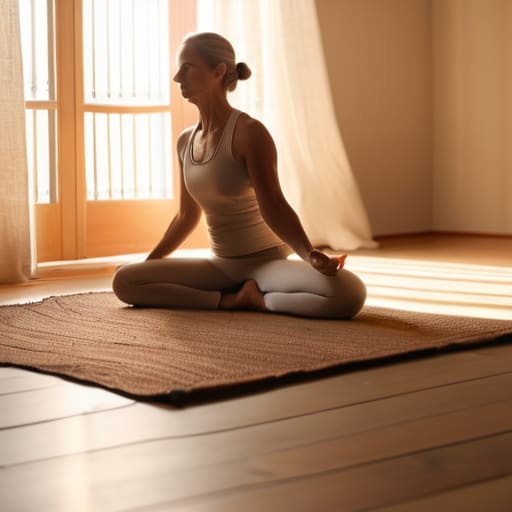
I don’t expect to end up in a complicated pose or twisting myself into a pretzel. For me, it’s really just about a few gentle morning stretches to shake off the stiffness that comes with age. I usually start right there on the rug, letting my spine lengthen slowly. There is something deeply grounding about focusing on the sensation of my breath before the rest of the world starts demanding my attention. It’s less about the workout and more about a mindful morning movement that signals to my body that the day has officially begun.
Once I feel a bit more fluid, I like to move through a few slow, deliberate motions. I’ve found that incorporating a simplified version of the sun salutation helps quite a bit; the sun salutation benefits are hard to deny when you’re trying to wake up your muscles without overtaxing them. It isn’t a race to reach the finish line, but rather a way to find a bit of yoga for joint mobility that carries me through my morning walk. I just take it one movement at a time, enjoying the quiet.
Sun Salutation Benefits for a Quiet Soul
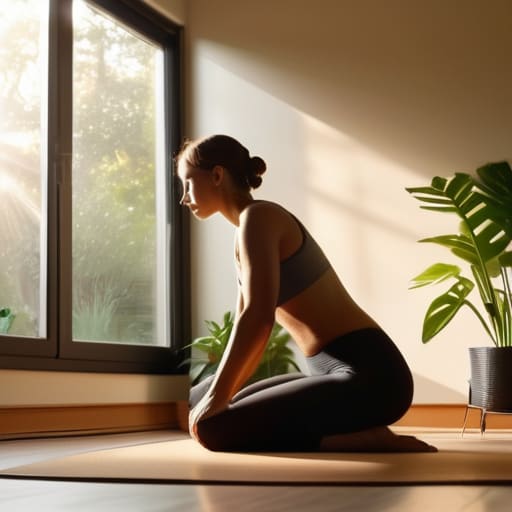
I used to think that movement had to be strenuous to count—something that left you breathless and sweating before the first cup of coffee. But as I’ve gotten older, I’ve learned that there is a profound difference between working your body and simply waking it up. This is where the sun salutation comes in. It isn’t about perfect form or looking like a gymnast; for me, it’s a rhythmic way to greet the light. Incorporating these flows into a morning yoga routine for beginners allows you to find a steady cadence that mirrors the rising sun itself.
There is a particular magic in the way the sequence flows from one pose to the next. As I move through the transitions, I feel a sense of mindful morning movement that settles the mental clutter from the night before. Beyond the physical stretch, the real sun salutation benefits lie in that quiet internal shift—a gradual awakening of the senses. It provides a natural yoga for energy boost that feels much more sustainable than a caffeine jolt, leaving me steady and ready to observe the world with clear eyes.
A Few Simple Ways to Keep Your Practice Grounded
- Don’t worry about the fancy poses you see on those glowing screens; just focus on how your muscles feel when you reach for the sky. If it feels good, you’re doing it right.
- Keep your mat in a spot where the morning light hits just right. There’s something about that soft, early sun that makes it much easier to stay present and quiet.
- Treat your breath like a steady metronome. I’ve found that matching my movement to a slow, rhythmic inhale and exhale keeps my mind from racing toward the day’s to-do list.
- Listen to your body’s “engine,” so to speak. Some mornings you’ll feel as sturdy as a bridge, and other days you’ll feel a bit creaky—and both are perfectly fine.
- Keep a small glass of water and your notebook nearby. If a particularly good thought or a sense of peace hits you mid-stretch, you can jot it down before the world gets too loud.
A Few Thoughts to Carry With You
Don’t worry about being flexible or looking like a professional; it’s more about how the movement feels in your own body than how it looks to anyone else.
Treat your morning practice like a slow cup of coffee—something to be savored and respected, rather than another task to check off a list.
Use these quiet moments to anchor yourself before the world starts rushing in, giving you a little bit of steady ground to stand on all day long.
The Quiet Before the Rush
I used to think productivity was about how much ground you could cover before noon, but these morning stretches have taught me something different; it’s about finding a bit of steady ground within yourself before the rest of the world starts pulling at you.
Bernard Oyelaran
Finding Your Own Rhythm
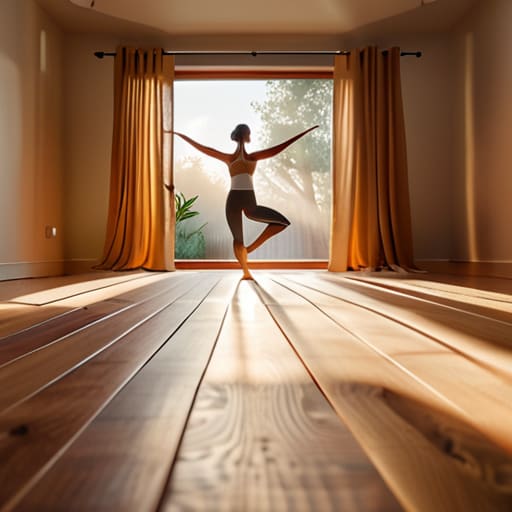
As I sit here with my notebook, watching the light shift across the floor, I’m reminded that these morning stretches aren’t about hitting a certain pose or achieving perfect flexibility. It’s really just about the intentional transition from sleep to wakefulness. Whether you are moving through a full sun salutation or simply reaching for the ceiling to feel the stretch in your spine, the goal is the same: to acknowledge your body and give it a moment of grace before the world starts demanding things from you. We’ve talked about the physical benefits and the mental clarity that comes with it, but at its heart, it is simply about creating a small pocket of peace in an otherwise frantic schedule.
If you’re feeling hesitant to start, my advice is to keep it simple. You don’t need a fancy studio or a complicated routine; you just need a bit of floor space and the willingness to be still. Life has a way of moving far too fast, and if we aren’t careful, we spend our entire lives sprinting toward a finish line that doesn’t exist. Use these quiet moments to anchor yourself in the present. After all, the most important part of the day isn’t what you accomplish by noon, but how you choose to greet the morning.
Frequently Asked Questions
Do I really need a fancy mat and expensive gear to get started, or can I just use the rug in my living room?
Honestly, you don’t need a single piece of fancy equipment to start. I’ve spent plenty of mornings practicing right on the rug in my living room, and it’s worked just fine. If the surface is stable and doesn’t slide, that’s all that matters. Don’t let the thought of buying expensive gear become another thing on your to-do list. Just find a quiet patch of floor and begin. The practice is in the movement, not the mat.
Is it possible to do these stretches if my joints feel a bit stiff from years of hard work?
Oh, I know that feeling well. After thirty years of hauling gear and managing job sites, my knees and lower back certainly have a way of reminding me of the work I’ve done. Please, don’t push through sharp pain. Think of it more like warming up an old engine; move slowly, listen to what your body is telling you, and only go as far as feels comfortable. It’s about the movement, not the flexibility.
How long should I actually spend on this before it starts feeling like another chore on my to-do list?
That’s a fair question. I used to approach everything like an engineering project—fixed timelines, strict deadlines. But if you start timing your stretches with a stopwatch, you’ve already lost the point. Don’t aim for a perfect hour. Even fifteen minutes of quiet movement is plenty. If it starts feeling like a box to check, stop. Walk away. Come back when it feels less like a task and more like a gift.
