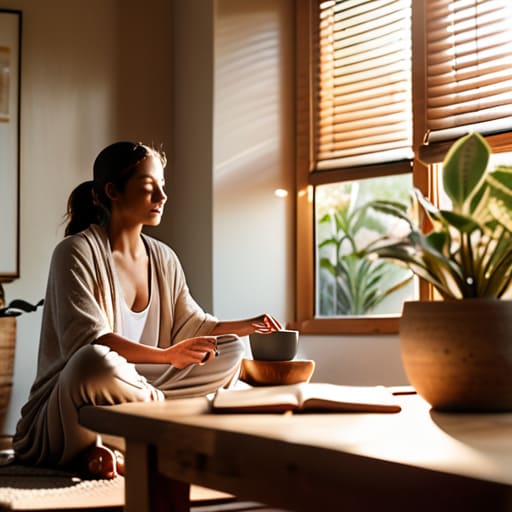
I spent thirty years on construction sites, where the roar of heavy machinery and the constant pressure of deadlines meant there was never a quiet moment to breathe. For a long time, I thought the idea of “meditation practices” was something reserved for people with nothing better to do—a sort of mystical, expensive nonsense involving incense and sitting perfectly still for hours. I used to roll my eyes at the thought, believing that if you couldn’t find peace in the middle of a cluttered, noisy life, then you weren’t really finding it at all.
But retirement has a funny way of teaching you that stillness isn’t about escaping the world; it’s about finally being present enough to see it. I’m not here to sell you on some complicated ritual or a specialized retreat. Instead, I want to share a few grounded, practical ways to find your center that don’t require a yoga mat or a mountain top. I’ll show you how to weave these simple habits into the things you already do, like enjoying a morning coffee or watching the light change on a landscape, so you can actually find some peace in the middle of your day.
Table of Contents
Breathwork for Relaxation a Slow Sip of Stillness

I’ve always found that the simplest tools are often the most reliable, much like a well-built bridge or a sturdy Leica camera. When my mind starts racing like a highway during rush hour, I turn to something as fundamental as my own lungs. I call it my “slow sip of stillness.” Instead of trying to force my thoughts into submission, I simply focus on the rhythm of my breathing. It’s a subtle form of breathwork for relaxation that doesn’t require a special cushion or a silent mountain top; I can do it right there in a crowded café or while waiting for a train.
I like to sit tall, let my shoulders drop away from my ears, and draw the air in deep, as if I’m inhaling the scent of rain on hot pavement. I hold it for a beat, then let it out with a long, slow sigh. This isn’t about achieving some lofty state of enlightenment; it’s about grounding myself in the present moment. By focusing on that steady ebb and flow, I find that stress reduction through meditation becomes less of a concept and more of a physical reality, allowing the frantic noise of the world to recede into the background.
Daily Mindfulness Exercises to Notice Lifes Small Details

I’ve found that you don’t need to sit cross-legged on a mountain peak to find peace; sometimes, it’s as simple as how you hold your coffee mug in the morning. I like to practice a few daily mindfulness exercises while I’m sitting at a local cafe or waiting for a train. Instead of reaching for my phone, I try to notice the way the light hits the grain of the wooden table or the specific, rhythmic clinking of spoons against porcelain. It sounds trivial, I know, but noticing these small textures acts like an anchor, keeping my mind from drifting into the anxieties of tomorrow.
Another way I approach this is through what I call “sensory walking.” When I’m out exploring a new town, I make a point to engage all my senses—the scent of damp earth after a rain, the weight of my camera in my hand, or the cool breeze against my face. These aren’t formal zen meditation methods, but they serve a similar purpose. They help in improving focus and concentration by pulling my attention away from the mental clutter and back into the physical world right in front of me.
A Few Simple Ways to Find Your Center
- Don’t feel like you need to sit cross-legged on a mountain top. Just find a sturdy chair—something that supports you—and let your shoulders drop away from your ears. It’s a lot like settling into a favorite reading chair after a long day of work.
- Use your senses as an anchor. When your mind starts racing toward tomorrow’s worries, bring it back to the weight of your feet on the floor or the subtle scent of the coffee brewing in the kitchen. These small, physical realities are always here to pull you back.
- Treat your wandering thoughts like clouds passing over a landscape. You don’t need to chase them or try to push them away; just acknowledge they are there, let them drift by, and gently return your attention to the present moment.
- Set a timer, but don’t treat it like a deadline. Whether it’s five minutes or twenty, let the bell be a gentle signal that you’ve given yourself permission to simply exist, rather than a starting gun for a race.
- Practice “micro-meditations” during the tasks you already do. While you’re washing the dishes or waiting for the kettle to boil, try to be fully present with the warmth of the water or the sound of the steam. It turns a chore into a quiet moment of grace.
Finding Your Own Rhythm

Don’t treat mindfulness like another project on a checklist; treat it like a slow walk through a park—there is no finish line, only the experience itself.
Use your existing daily rituals, like the warmth of a morning coffee or the weight of your camera in your hand, as anchors to pull you back into the present moment.
Remember that stillness isn’t about clearing your mind entirely, but rather about learning to sit quietly with whatever thoughts happen to wander by, much like watching clouds pass over a landscape.
The Quiet Engineering of the Soul
“Meditation isn’t about forcing the world to stop spinning; it’s more like sitting on a park bench and finally noticing the way the light hits the trees. It’s the simple, steady work of learning to be present for your own life, one quiet breath at a time.”
Bernard Oyelaran
Finding Your Own Rhythm
As I look back over what we’ve discussed, it’s clear that meditation isn’t some grand, complicated feat reserved for monks on mountaintops. Whether you are finding your center through the steady rhythm of your breath or simply training your eyes to catch the way the light hits a coffee cup, you are practicing the art of being present. We’ve talked about using breathwork to anchor ourselves when the world gets too loud and how small, daily mindfulness exercises can turn a mundane walk into a meaningful observation. It isn’t about clearing your mind of every single thought—that’s a fool’s errand—but rather about learning to sit quietly with whatever thoughts happen to drift by.
If there is one thing my years in engineering taught me, it’s that the most stable structures aren’t built overnight; they require a solid, patient foundation. Your mental well-being is much the same. Don’t feel pressured to master these practices by sunset. Instead, treat your mindfulness like a slow-cooked meal or the careful restoration of an old Leica camera—take your time and enjoy the process. Just remember to step away from the noise every once in a while. The world will still be spinning when you get back, but you might find you’re much better equipped to savor the view.
Frequently Asked Questions
I’ve always been a man of action; is it possible to practice mindfulness while I’m actually out walking or working in the garden, rather than just sitting still?
Oh, absolutely. In fact, I think I find more peace in the dirt of my garden or on a long stroll than I ever do sitting perfectly still in a chair. You don’t need to be a statue to be mindful. It’s about bringing your full attention to the task at hand—the weight of the trowel in your hand, the rhythm of your stride, or the way the light hits a leaf. Just move with intention.
Do I need to clear my mind of all thoughts entirely, or is it alright if my mind wanders back to my to-do list every few minutes?
Oh, let your mind wander. Please, don’t worry about that. If I tried to clear my head entirely, I’d be fighting a losing battle against thirty years of engineering blueprints and project deadlines. It’s much like restoring an old Leica; you don’t force the gears, you just work with them. When a thought drifts in, just acknowledge it—like a passing cloud—and gently guide your focus back to your breath. It’s the returning that matters.
How long should I actually be sitting there before I start seeing the benefits—is it a matter of minutes or something that takes months of practice?
It’s a bit like restoring an old Leica camera; you won’t see the gears clicking into place after the first turn of a screw. Some days, a five-minute sit will clear the fog immediately. Other times, it takes weeks of consistent practice before you truly feel that steady calm. Don’t chase a finish line. Just show up, sit, and let the benefits settle in like the steam rising from a good cup of coffee.
