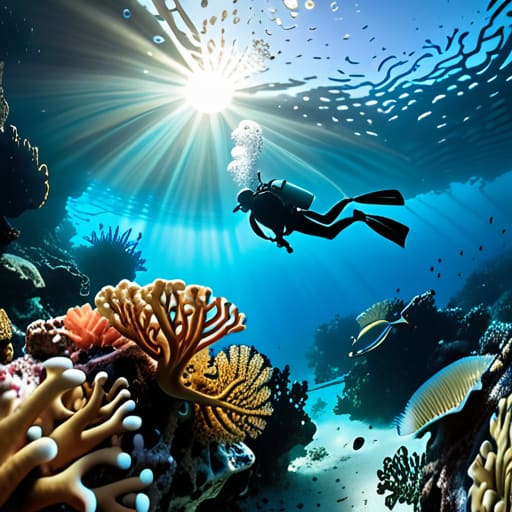
I remember sitting on the edge of a sun-bleached pier in Cozumel, watching a group of younger travelers scramble around with enough high-tech gadgets to launch a satellite. They were so preoccupied with checking pressure gauges and debating the latest computer models that they completely missed the way the light was hitting the turquoise water. It struck me then that most people approach scuba diving like it’s a competitive sport or a technical engineering problem to be solved, rather than what it actually is: a chance to finally be still. We spend our whole lives fighting gravity and noise, but once you descend, all that frantic energy just evaporates.
I’m not here to sell you on the most expensive gear or the most adrenaline-pumping excursions. Instead, I want to share what I’ve learned about finding the quiet rhythm beneath the waves. I’ll give you my honest, no-nonsense take on how to prepare for your first descent and, more importantly, how to actually savor the experience without letting the gear or the nerves get in the way. Let’s focus on the beauty of the slow descent, rather than the rush of the surface.
Table of Contents
Finding Your Pace Through Buoyancy Control Training
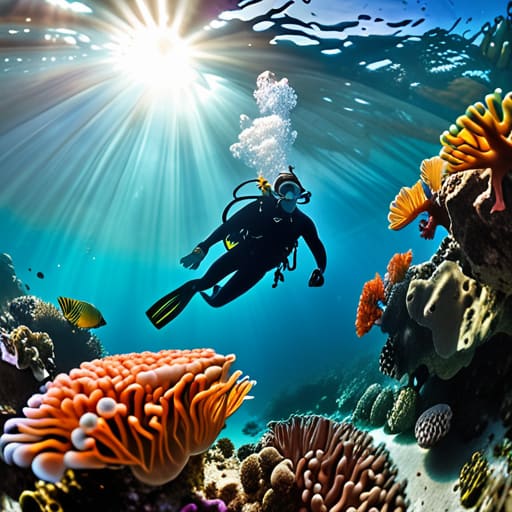
In my engineering days, I learned that a structure is only as stable as its foundation. The same holds true beneath the waves. When I first started, I was all movement and heavy breathing, kicking wildly just to stay level. It felt less like a graceful glide and more like a frantic struggle against gravity. That’s when I realized that mastering buoyancy control training isn’t just a technical requirement; it’s the moment you actually begin to inhabit the ocean rather than just visiting it.
It takes a certain kind of patience—the kind I used to apply to restoring old Leica cameras—to learn how to balance your lungs and your gear. You start to notice how a tiny, controlled breath can lift you toward the sunlight or settle you back toward the sand. Once you find that sweet spot, the frantic energy fades. You aren’t fighting the water anymore; you are part of its rhythm. This stillness is what allows you to truly appreciate the delicate textures of the sea floor without disturbing the very life you came to see.
Choosing Essential Scuba Diving Gear for Slow Exploration
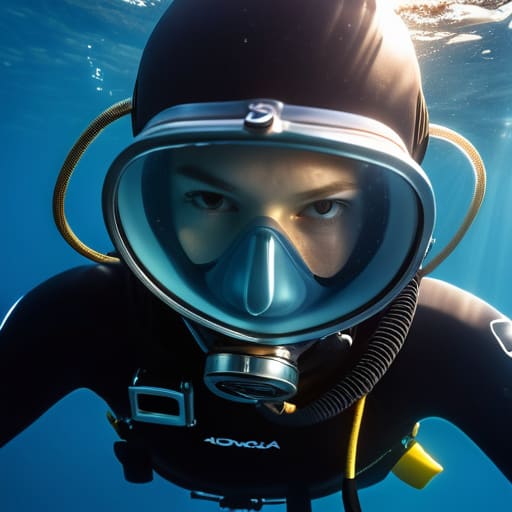
When it comes to selecting your equipment, I’ve learned that there is a significant difference between buying what is flashy and investing in what is reliable. Much like the heavy machinery I used to oversee in my engineering days, your gear should feel like a natural extension of yourself, not a burden. I always tell folks that the most important piece of essential scuba diving gear isn’t the most expensive regulator on the shelf, but the one that fits you perfectly and allows you to breathe without thinking about it. If you’re constantly fighting a mask that leaks or a fin that pinches, you’ll miss the very stillness you went down there to find.
I tend to favor gear that is practical and unpretentious. I’ve spent many afternoons meticulously cleaning my vintage cameras, and I approach my dive kit with that same level of care. You don’t need every gadget available, but having a well-maintained computer and a dependable buoyancy compensator is vital. Taking the time to understand how your tools function allows you to stop focusing on the mechanics and start focusing on the subtle play of light through the water column. It’s about being prepared so that you can truly be present.
A Few Lessons from the Blue: How to Truly Be Present Underwater
- Master the art of the “quiet breath.” When I first started, I was always fighting my own lungs, breathing too fast and feeling the frantic rush of the surface. Now, I realize that the more you settle into a slow, rhythmic inhale and exhale, the more the ocean seems to open up to you. It’s much like sitting on a porch at dusk; you have to be still to hear the crickets.
- Don’t chase the big stuff. It’s easy to get caught up in the hunt for a shark or a turtle, but some of my most profound moments have come from hovering inches away from a single, brightly colored nudibranch or watching the way light dances through a patch of seagrass. The small details are where the real magic lives.
- Respect the current, don’t fight it. In my engineering days, we spent a lot of time trying to control forces. In the water, I’ve learned that’s a losing battle. If there’s a current, find a rock, tuck in, and let it wash over you. There is a certain peace in realizing you aren’t in charge, and that the ocean will move exactly how it intends to.
- Keep your eyes on the horizon—or what passes for it. It’s tempting to stare straight down at your gauges or your computer, but if you do that, you’ll miss the way the light shifts as the sun moves. Look up, look around, and take in the vastness. It puts everything into perspective.
- Always leave a little something for the next person. I carry a small notebook to sketch, but I also make sure my presence leaves no mark. I’ve learned that the most beautiful underwater landscapes are the ones that remain untouched, exactly as they were before I arrived. We are guests here, after all.
Lessons from the Deep
Don’t let the urge to see everything at once rush your descent; the real magic happens when you learn to hover and simply exist in the water.
Invest in gear that feels like a second skin, because discomfort is the quickest way to lose your connection to the quiet rhythm of the ocean.
Remember that the best dives aren’t measured by how many fish you saw, but by how much of the stillness you actually managed to feel.
The Weight of the World
“Down there, beneath the swell, you realize that true freedom isn’t about how fast you can move, but about finally learning how to be still.”
Bernard Oyelaran
The Quiet Descent
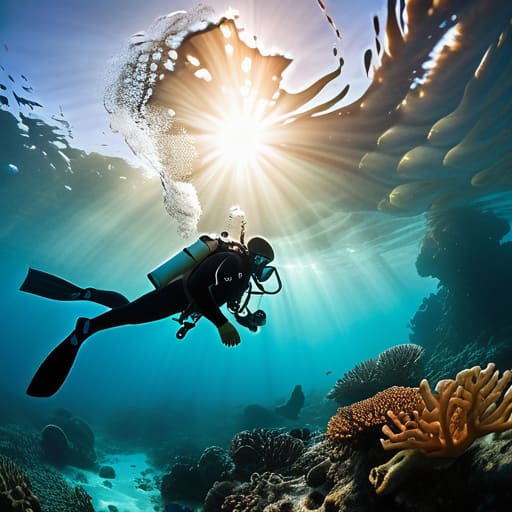
As I sit here in this little seaside cafe, sketching the way the light hits the salt-crusted pier, I find myself thinking back to those first few dives. It wasn’t about how deep I could go or how many rare species I could check off a list; it was about the discipline of the breath and the right tools for the job. We’ve talked about the necessity of mastering your buoyancy and the importance of investing in gear that feels like an extension of yourself rather than a burden. When you get those two things right, you stop fighting the water and start moving with it. It’s the difference between a frantic struggle and a graceful, intentional drift through a world that most people will never truly see.
Ultimately, scuba diving is less about the sport and more about the perspective it grants you. Down there, the noise of the world—the deadlines, the traffic, the endless rush—simply cannot reach you. There is a profound, humbling peace in realizing that you are merely a guest in a vast, silent kingdom. I hope you find the courage to take that first step into the blue, not to conquer the ocean, but to find your own stillness within it. After all, the most beautiful things in life are rarely found by rushing; they are found by slowing down enough to notice them.
Frequently Asked Questions
How much of a physical toll does diving take on someone who isn't quite as young as they used to be?
I’ll be honest with you: your body won’t bounce back quite as fast as it did in your twenties. I’ve noticed that the nitrogen load and the pressure changes can leave me feeling a bit more heavy-set or fatigued the next day. But it isn’t about being “too old”; it’s about listening. If you take your time, manage your depth, and don’t rush those ascents, the ocean remains a gentle companion, not a burden.
Is it possible to truly enjoy the scenery if I'm constantly worried about my air supply or technical skills?
It’s a fair question, and honestly, I felt that same knot in my stomach during my first few dives. It’s hard to admire a passing school of fish when you’re hyper-focused on your gauge. But that’s where the training comes in. Once the mechanics of breathing and buoyancy become second nature—like driving a car without thinking about the pedals—the anxiety fades. That’s when the ocean finally stops being a task and starts being a view.
What are some of the best ways to document these underwater moments without letting the camera distract me from the experience itself?
I’ve learned that the best way to capture a moment is to not let the lens become a barrier. I often think of my old analog cameras; if you’re constantly fiddling with dials, you miss the light. Underwater, I prefer a simple, reliable action camera mounted nearby. It allows me to keep my eyes on the reef, not the settings. Capture the memory, sure, but don’t forget to actually live it.
