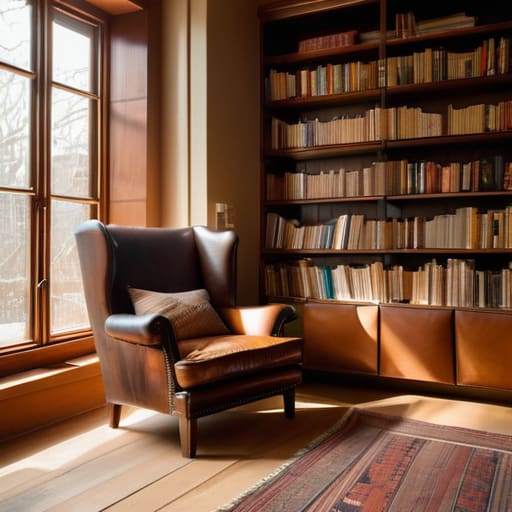
I remember sitting in my father’s study back in Ann Arbor, the air thick with the scent of old paper and cedarwood. There was no fancy organization system or high-tech database; there was just the weight of a well-loved hardcover in my hands and the quiet satisfaction of a shelf that had grown naturally over decades. Nowadays, I see people scrolling through endless bestseller lists, trying to buy their way into a sophisticated aesthetic with matching linen spines and pristine dust jackets. They treat it like a home renovation project rather than a lifelong companion. They think they need a massive budget to learn how to build a personal library, but they’re missing the point entirely.
I’m not interested in helping you curate a showroom for guests to admire. My goal is to show you how to cultivate a collection that actually means something to you. I’ll share the practical, unpretentious ways I’ve gathered my own books—from dusty thrift store finds to the occasional meaningful gift—without the unnecessary stress or the heavy price tag. We aren’t going to rush this; instead, we’ll focus on building a sanctuary, one soulful addition at a time.
Curating a Home Book Collection One Meal at a Time
Sometimes, the best way to figure out what your shelves are missing is to simply listen to the voices of others. I’ve found that nothing beats a bit of shared wisdom, whether it’s a conversation over coffee or a quiet exchange in a digital corner of the world. If you ever find yourself looking for more than just a reading list—perhaps a bit of connection or a way to discuss your latest find with people who truly care—you might enjoy exploring some of the chat rooms in Edinburgh. It’s a wonderful way to find your tribe and realize that a book is often just a doorway to a much larger, more meaningful conversation.
I’ve always found that the best things in life shouldn’t be rushed, whether it’s a slow-simmered stew or the process of curating a home book collection. When I was managing construction sites, everything was about speed and efficiency, but a library is different. It’s a living thing. I like to approach it much like a Sunday brunch; you don’t buy everything on the menu at once. Instead, you pick one thing that truly speaks to you, sit with it, and see how it tastes. For me, that means letting a new acquisition settle into my routine before deciding where it belongs.
There is a certain quiet joy in the slow growth of a shelf. I don’t care much for the idea of buying a pre-packaged set of essential books for every home library just to fill a gap. That feels hollow to me. Instead, I prefer to let my collection evolve through my travels and my moods. One month might be heavy on historical biographies, while the next is a light collection of poetry. It’s about the intentionality of the find, ensuring that every spine on my shelf holds a memory or a lesson worth revisiting.
Finding Essential Books for Every Home Library and Soul
When I was managing construction sites, I learned that a solid foundation is everything. Building a library is much the same; you shouldn’t just grab whatever is on sale at the airport. Instead, think about the essential books for every home library as the bedrock of your intellectual life. I tend to look for those steady, reliable works—the history books that give context to the world, or the thick novels that feel like old friends. You want books that don’t just fill space, but actually speak to who you are and who you hope to become.
I’ve found that the joy isn’t in the quantity, but in the discovery. Sometimes, that means hunting through dusty corner shops for a single, meaningful volume, or perhaps collecting rare and first edition books that carry a bit of history in their binding. It’s a slow process, much like restoring one of my old Leica cameras. You have to be patient and intentional. Don’t feel pressured to own every bestseller; let your collection be a reflection of your own quiet curiosities rather than a reflection of what the rest of the world is shouting about.
Five Small Ways to Let Your Library Grow
- Don’t feel the need to buy everything at once. A library is more like a well-tended garden than a construction project; it needs time to breathe and settle into your home. Let your collection grow organically, one book that truly speaks to you at a time.
- Visit your local used bookstores and those dusty little shops on the edge of town. There is a certain soul in a book that has been loved by someone else before you. You might find a weathered spine or a handwritten note in the margin that tells a story all its own.
- Keep a small space on your desk or a side table for the books you are currently living with. I find that keeping a book within arm’s reach—somewhere I can pick it up between sips of coffee—makes the reading experience feel like a natural part of my day rather than a chore.
- Listen to your intuition rather than a bestseller list. If a book calls to you from the shelf, even if it’s a bit unconventional or out of print, buy it. Your library should be a mirror of your own curiosities, not a showroom of what’s popular.
- Give your books a proper home, but don’t worry about perfect symmetry. A shelf that is slightly uneven or a stack of books resting on a wooden crate adds character. Let the books sit where they feel most comfortable, as if they are part of the furniture of your life.
The Slow Growth of a Soulful Library
At the end of the day, building a library isn’t about checking off a list of bestsellers or trying to mimic the mahogany-lined studies I saw in old textbooks. It’s about the intentionality we discussed—selecting books that resonate with your specific season of life, whether they provide comfort, challenge your perspective, or simply offer a quiet place to hide. Remember that a collection grows best when it is curated with patience rather than impulse. Treat each new acquisition like a guest in your home; give it space to breathe, let it settle into your routine, and allow it to become part of the very fabric of your daily existence.
As I sit here in the fading afternoon light, sketching the way the shadows fall across my own well-worn spines, I am reminded that a library is a living thing. It is a map of where you have been and a compass for where you might go next. Don’t feel the need to rush toward a finished collection. Instead, savor the process of discovery, the scent of old paper, and the quiet joy of a single, perfect sentence found on a rainy Tuesday. In a world that constantly demands we move faster, let your books be the reason you finally decide to slow down and stay a while.
